California law, plainly
Who is allowed to clean a crime scene in California
Crime scene and trauma cleanup is regulated in California. Businesses that do it must register with the state and follow medical waste rules. Here is what the law says and how to check a company.
Lines answered 24 hours a day, 7 days a week
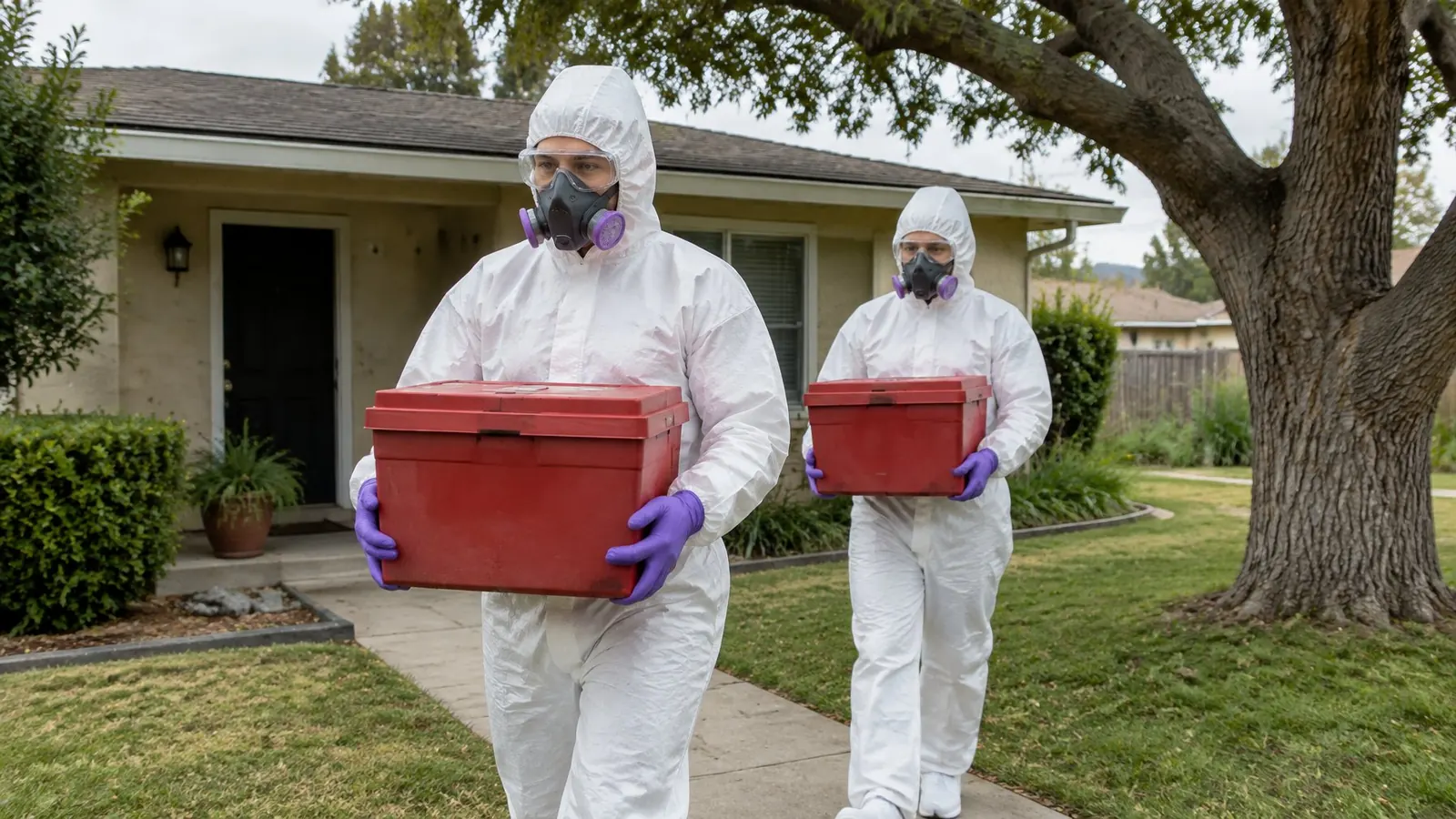
The Trauma Scene Waste Management Act
Health and Safety Code 118321 to 118321.6
What it covers
Waste that would be ordinary trash except that it is contaminated with large quantities of human blood or body fluids after a death, serious injury or illness.
Source: HSC 118321
Registration
A trauma scene waste management practitioner must register with the California Department of Public Health, which issues a registration and a trauma scene waste hauling permit.
Source: HSC 118321.1
The state's list
CDPH keeps the list of registered practitioners, sends it to local health officers and county sheriffs, and makes it available to the public.
Source: HSC 118321.2
Worker protection
CDPH is the sole enforcement agency for trauma scene waste. Standards include protection for workers under Cal/OSHA's bloodborne pathogen rules and the chemicals and methods used to clean and disinfect.
Source: HSC 118321.3
Where the waste goes
The waste leaves the scene as soon as the removal phase is finished and goes to a permitted medical waste transfer station or treatment facility.
Source: HSC 118321.5
Who counts as a practitioner
CDPH describes a practitioner as a person who, as a commercial activity, removes human blood, body fluids and other residue from the scene of a serious injury, illness or death, and who must show a contract with a registered transporter or permitted facility.
Source: CDPH
Checking a company
How to check before you book
The California Department of Public Health keeps the list of registered trauma scene waste management practitioners on its Trauma Scene Waste Management Practitioners page. Ask the company you speak with for its registration, and compare the name with the list.
Registration is also what CalVCB looks for: it only reimburses crime scene cleanup done by a registered practitioner.
Registration tells you a company is on the state's list. It does not tell you about price or service, so ask the questions below as well.
- Will you give me a written price before work starts, and what could change it?
- Which materials do you expect to remove, and will you show me before you do?
- Can you work with my insurer or with a CalVCB claim by providing an itemized invoice and photos?
Families
What about cleaning it ourselves?
The registration rule is written for people who do this work as a business. Even so, most families do not clean a trauma scene themselves. It means handling blood and body fluids without proper protection, and the waste is not meant for household bins.
There is also the emotional side. You are allowed to hand this to someone else.
Plain answers
Guides for families and property owners
- Who pays for biohazard cleanupCalVCB, homeowner and renter insurance, landlords and estates, in plain terms.
- After a death at home: what happens nextThe medical examiner, the funeral home, the scene and the cleanup, step by step.
- For landlords and property managersA death, a crime or needles in a rental unit: what to do and what to keep.
- How this referral service worksWho answers, what they ask, and what this site is and is not.
- Questions and answersShort answers to the questions people ask most.
When you are ready
One call to a cleanup company that serves Stockton
Say what happened, where, and roughly when. The company will ask a few questions, explain what the work involves and arrange a visit if you want one.
Talk to a biohazard cleanup company
Your call is connected with an independent cleanup company that works in Stockton and San Joaquin County. You can ask questions first. There is no obligation to book.
Call (209) 555-0161Lines answered 24 hours a day, 7 days a week
Calls may be recorded. Read the referral disclosure and the privacy policy.